Explore the fascinating evolution of Chinese incense burners, from the mythological Boshan burners of the Han Dynasty to the elegant stone censers used in modern Singapore homes.
The Mythological Boshan Burner
Incense burning in China dates back thousands of years, but it was during the Han Dynasty that the art truly flourished. The Boshan burner (博山炉) was designed to represent Mount Bo, a mythical mountain where immortals lived. The domed lids were intricately carved with mountains and clouds. When lit, the smoke would drift out, mimicking the mist around a sacred peak.
The Rise of Scholar’s Censers
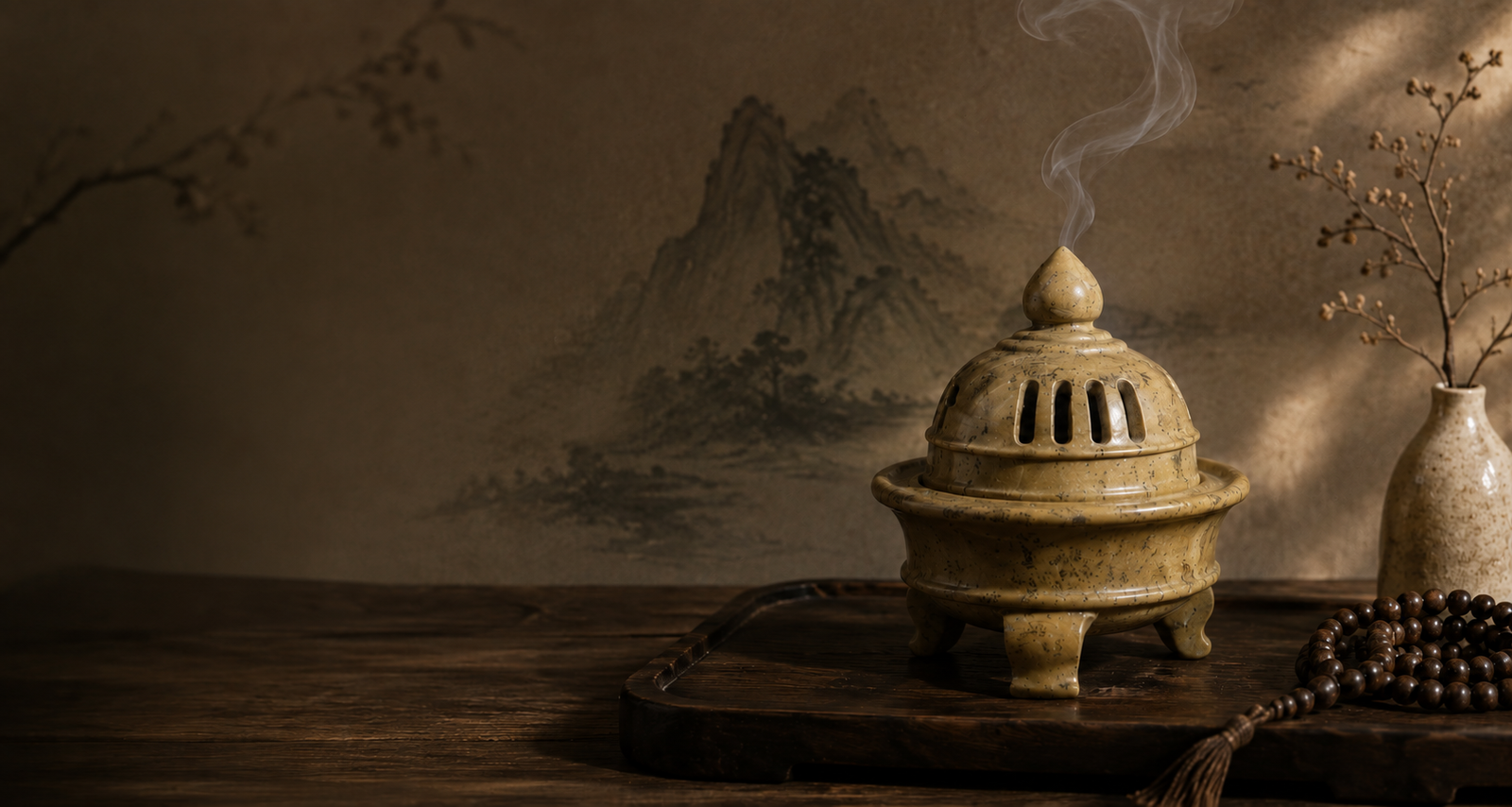
During the Tang and Song dynasties, incense culture shifted from purely religious use to a sophisticated lifestyle art (香道). Scholars began using smaller, minimalist censers on their desks for meditation and to accompany their studies. Materials like bronze, ceramic, and stone became popular, with a focus on elegant shapes like the three-legged censer (三足炉).
Modern Zen and Home Decor
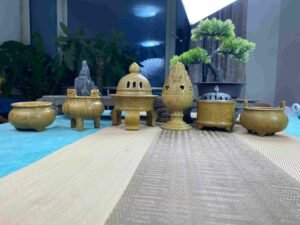
Today, incense burning is experiencing a major revival, especially in urban centers like Singapore and Kuala Lumpur. Modern homes use incense for relaxation, yoga, and creating a Zen atmosphere. Nishan stone censers bridge the gap between ancient heritage and modern aesthetics. The heavy, grounding nature of the stone adds a layer of tranquility that plastic or metal simply cannot match.
Add comment